
Automating Engine Inspections in Azure Government
Every inspection decision affects whether an aircraft returns to service or stays grounded. Engine analysts were relying on manual inspections and paper records, leaving room for human error and inconsistent documentation across inspection teams.
Our client needed a secure, cloud-based tool to improve accuracy and speed.
Opportunity
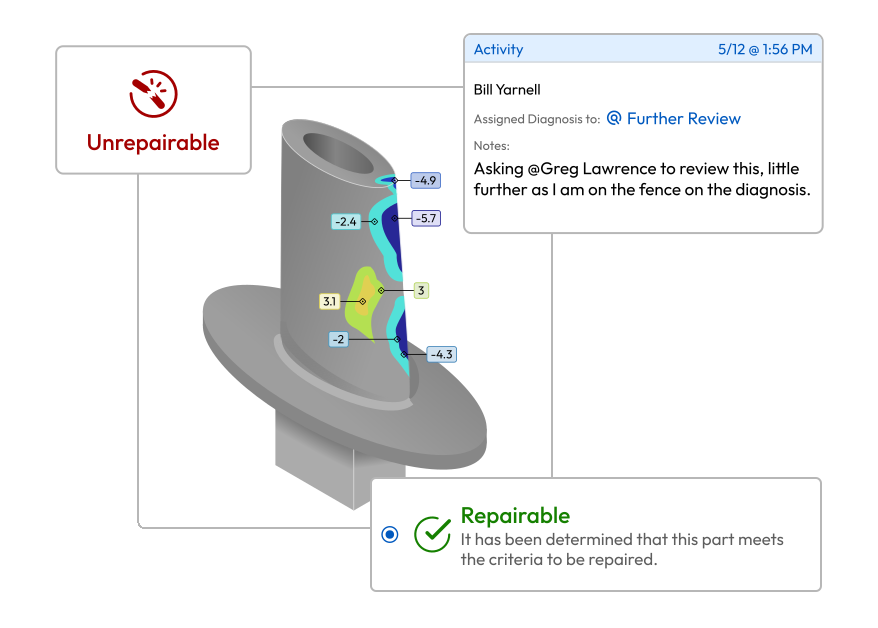
Engine analysts relied on handwritten measurements and paper records. The client needed a secure way to reduce errors and speed up dispositioning.
Results
- Automated inspection workflow
- Reduced manual errors
- Centralized engine data
Client
Aerospace and Defense Engine Manufacturer
Our client manufactures aero-engines and inspects engine components to determine whether parts are ready to return to flight or require maintenance. They serve a government customer and operate in highly regulated environments where accuracy and security are critical.
About the Client
Industry
Aerospace & Defense
Customer Base
U.S. Government
Location
United States
Focus
Engine Inspection & Maintenance
Opportunity
When Paper Slows a Mission-Critical Decision
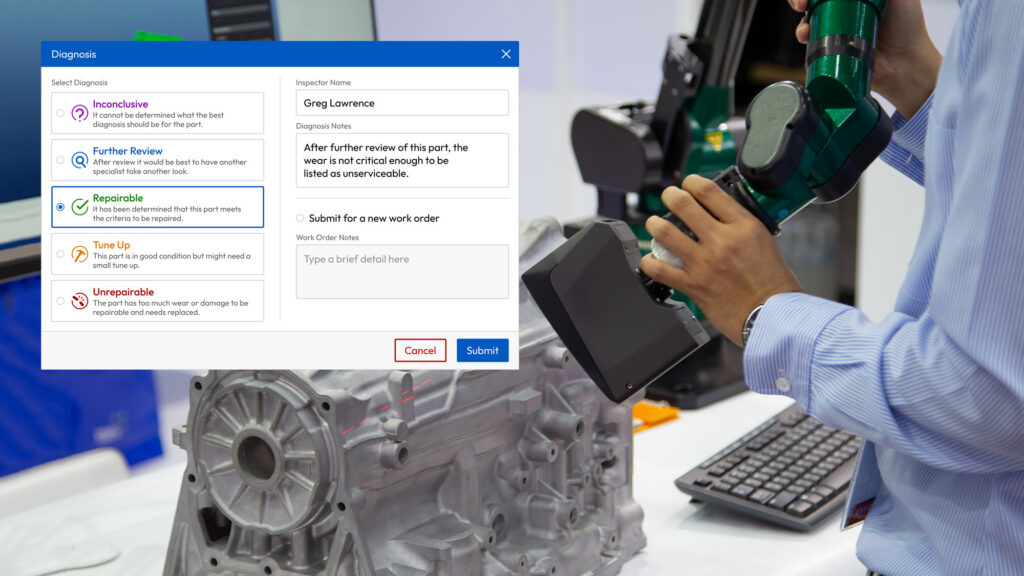
Before this project, engine analysts inspected parts by hand. They recorded measurements manually and stored results on paper.
This slowed their work. It also increased the chance of mistakes.
Every inspection determines whether a part is fit to return to flight or requires maintenance. Delays and errors affect schedules, costs, and safety.
The client also needed to show their government customer that this process could move securely to the Cloud.
They wanted to:
- Reduce human error
- Save time
- Eliminate paper records
- Analyze inspection data more effectively
They needed a solution that protected sensitive data while helping analysts make faster, more confident decisions.
What We Did
Cloud Development
Computer Vision
Product Discovery
Product Planning
User Validation
Visual Design
Web Development
Solution
Building a Secure, Automated Inspection Tool
At SEP, we treat every engagement as a partnership. The client had a strong product vision but needed a clear path forward.
Phase 1: Discovery & Validation
We began with a Discovery workshop. Together, we tested assumptions, defined requirements, and built both low- and high-fidelity prototypes.
This clarified what needed to be built first and created a roadmap for future expansion.
“The product discovery workshop was critical. It built a strong strategic direction and helped our mechanical engineers and software engineers understand the same problem. The deliverables went above and beyond what I expected.”
Phase 2: MVP Development
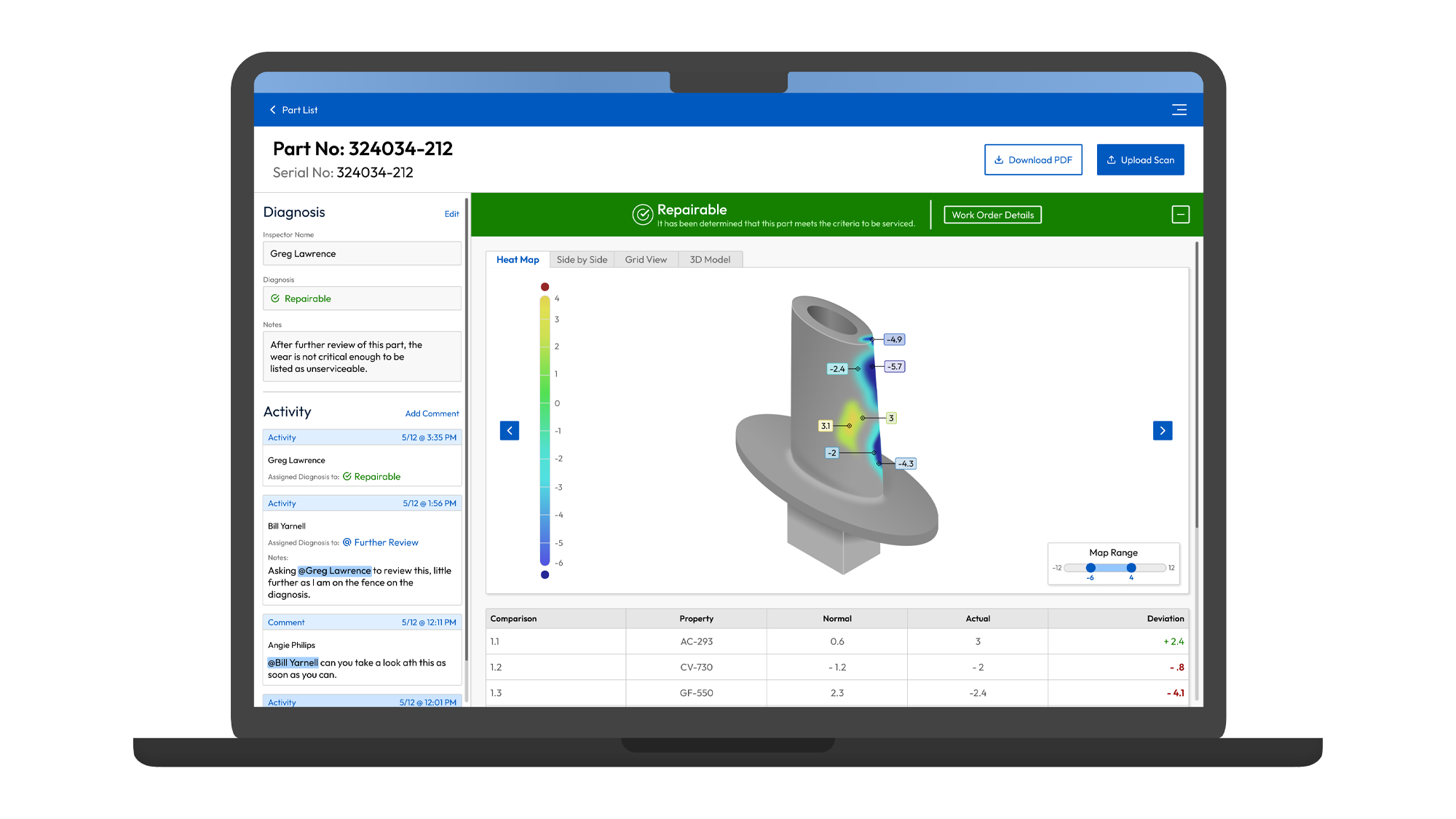
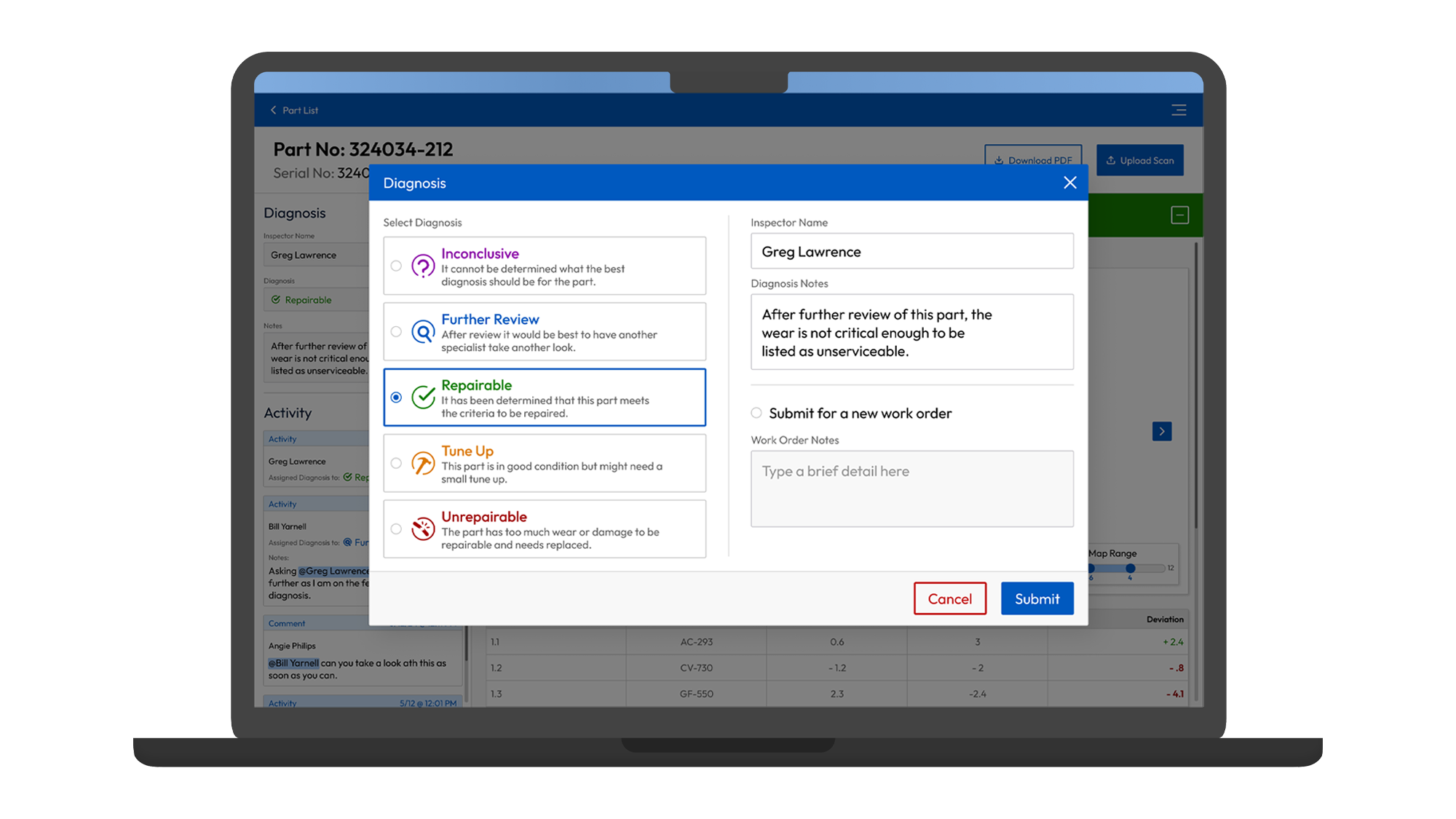
We developed a minimum viable product that automates the inspection process.
The system:
- Automates a third-party 3D metrology software package
- Analyzes files from a blue light scanner
- Displays part measurements and images
- Enables analysts to quickly determine maintenance needs
This replaced manual data entry and paper-based workflows.
Phase 3: Azure Government Enablement
This was the first application the client prepared for their Azure Government tenant.
Azure Government keeps sensitive data on U.S.-based infrastructure. We validated the deployment in SEP’s own tenant, coached the client’s IT teams through the deployment process, and helped establish best practices for future cloud initiatives.
The result was a clear, repeatable path forward.
“I appreciated the cadence of progress and how often we received updates. Working so quickly and agilely was refreshing. We were able to get real feedback from our users that resulted in a working prototype.”
Tech Stack
 JavaScript
 Node (JavaScript)
 Python
 React
React
Results
Modern Inspection for Mission-Critical Systems
The automated inspection tool improved the accuracy of measurements and inspection decisions. It reduced manual data entry and minimized the risk of human error.
By eliminating paper records and centralizing data in Azure Government, the client improved information transfer and positioned themselves for long-term cost savings.
The client now has clear guidelines and confidence to expand their cloud capabilities.
Improved inspection accuracy
Reduced manual errors
Eliminated paper-based records
Faster inspection decision-making
Validated Azure Government deployment path
Positioned for future cost savings
Frequently Asked Questions
Automated engine inspection uses software and scanning technology to measure and analyze engine parts instead of relying on manual recording.