
Powering U.S. Solar Growth with Embedded Development
Homeowners depend on steady, reliable energy to keep daily life running. SEP partnered with a global solar leader to adapt their technology for U.S. homes, helping speed certification and build a foundation for growth.
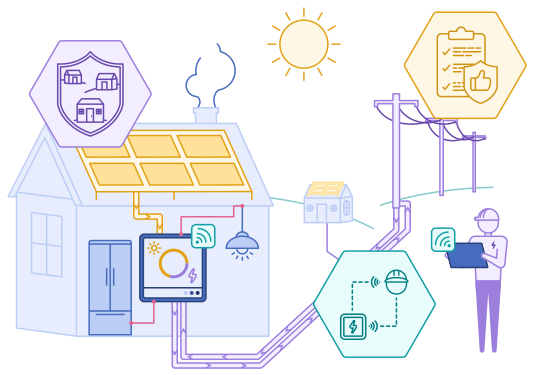
Opportunity
The client needed a Midwest partner to help their new U.S. R&D team adapt solar inverters for certification and market launch.
Results
- MVP certified and tested
- Enabled U.S. market entry readiness
- Trusted with U.S. architecture leadership
Client
Global Solar Solutions Leader
The client is a global provider of welding technology, battery charging, and solar energy systems. Headquartered in Europe, they are expanding in the U.S. with a focus on delivering continuous, reliable solar energy for residential customers. To support this effort, they established a new R&D hub in Indiana.
About The Client
Industry
Renewable Energy & Technology
Type
Private
Headquarters
Europe
Markets
Global

Opportunity
Supporting Local Innovation in Solar Energy
As part of their “local for local” strategy, the client needed a U.S.-based development partner who could work side-by-side with their new Indiana team.
SEP stood out based on proven experience, and the relationship moved quickly from conversations to an active mulit-year engagement designed to deliver certification-ready software.
What We Did
API Integration
Certification Readiness (IEEE, SunSpec)
Embedded Software Development
Requirements-gathering Workshops
Technical Leadership (Architecture Oversight)
Solution
Embedded Innovation for U.S. Solar Markets
Bringing solar technology into the U.S. market required more than code updates—it demanded strong collaboration between SEP engineers and the client’s team. Together, they balanced technical milestones with strategic alignment to speed certification and market readiness.
Embedded Software Development
SEP engineers adapted the inverter software to meet U.S. electrical and communication standards. Using C++ and Yocto, they enhanced the product’s internal API to support American grid configurations, a step required for regulatory approval.
Beyond the code, SEP helped shape the product by leading requirements gathering workshops. Engineers participated in focus weeks (3 continuous weeks) together with both US and global teams to set the stage and gather alignment between global and local teams.
Tech Stack
 C++
C++
 OpenAPI Specification
Swagger
OpenAPI Specification
Swagger
 Yocto
Yocto
Results
Certification-Ready and Poised for Growth
The joint team delivered a minimum viable product (MVP) that passed certification testing, unlocking U.S. market entry. The client praised SEP’s technical skill and responsiveness, appointing a lead SEP developer to collaborate on the U.S. architecture.
MVP certified and tested successfully
Collaborative U.S. architecture leadership