
AI-Native App Modernization at a Fraction of the Cost
SEP originally built FORUM Credit Union’s cross-platform mobile app. Years later, member expectations for native iOS and Android experiences outgrew what the architecture could support. FORUM once again turned to SEP.
We delivered native apps at roughly one-sixth the labor cost of a conventional rebuild, using an AI-native development workflow built around agentic AI and spec-driven engineering.
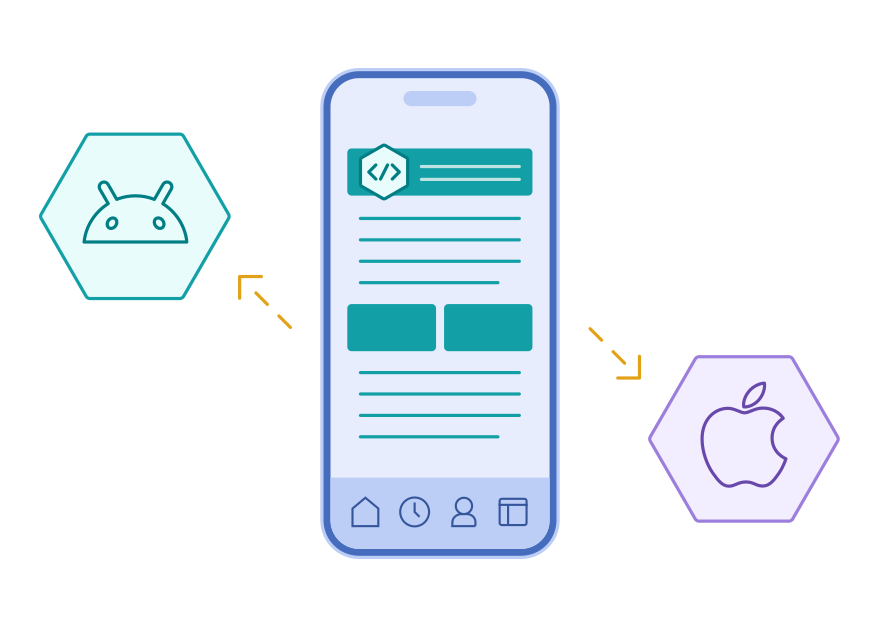
Opportunity
FORUM’s mobile app had served members well, but the architecture was becoming a compounding liability. The cross-platform architecture was a ceiling, not a foundation.
Services
Results
- Native iOS and Android apps delivered ahead of schedule
- 1/6th the labor of a traditional build
- Agentic workflow patterns that improved each sprint
- A roadmap unlocked
Client
FORUM Credit Union
FORUM Credit Union competes with a standard that most credit unions don’t set for themselves. Their digital products are built to match the big banks, not just keep pace with other credit unions, and their mobile app reflects their ambition. The app handles more transactions monthly than all of FORUM’s physical branches combined in a year. FORUM has always had a feature-rich app. This project was about making sure the platform could keep up with where they want to go next.
About the Client
Industry
Financial Services
Customer Base
Credit Union Members
Location
Indiana
Focus
Mobile Banking
Opportunity
When Cross-Platform Hits Its Ceiling
SEP had built FORUM’s mobile app on a cross-platform framework that served members well for several years. Over time, however, it became the thing standing between FORUM and their next phase of growth. Third-party integrations had already proven difficult, and every new feature on the roadmap carried more of the same risk.
They needed:
- Native apps that met member expectations
- A modernization approach that did not inflate costs or timelines
- Output quality suitable for a regulated environment
- A platform positioned for everything on their roadmap
What We Did
AI Native Development
iOS (Swift) Development
Android (Kotlin) Development
Agentic Workflow Design
Spec-Driven Development
Product Discovery
Solution
A Small Team. A New Kind of Workflow.
SEP built a spec-driven, agentic AI development workflow designed to deliver what a much larger team would typically require. It delivered native iOS and Android apps at one-sixth the labor cost of a conventional build.
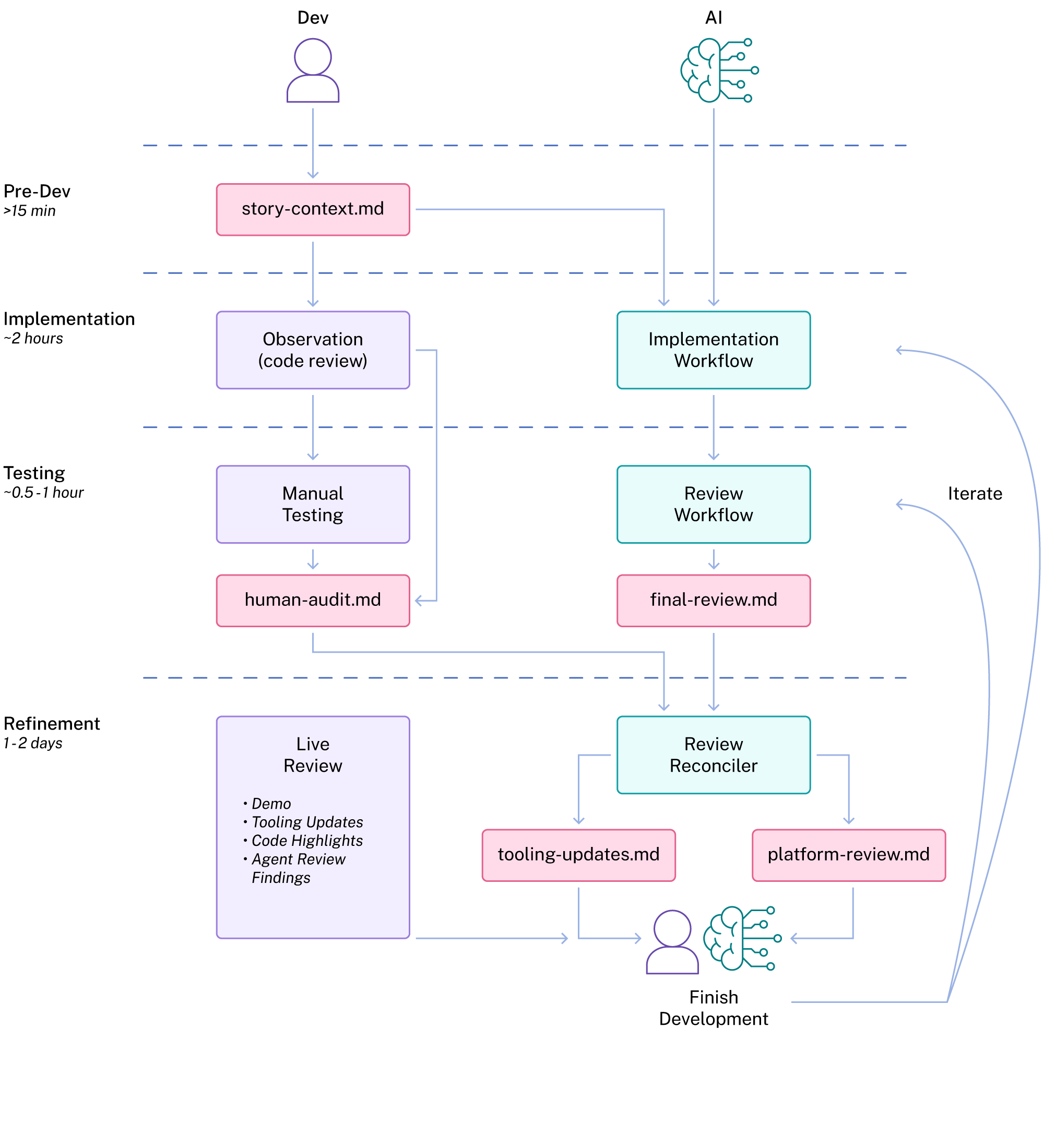
Spec-Driven Foundation
Early on, the team established a structured specification process. Clear specs gave the agentic pipeline well-defined inputs and gave engineers a reliable baseline for validation. The modernization effort was sequenced by risk and complexity, tackling the most difficult pieces first so that anything likely to affect the timeline surfaced early, when there was still room to adjust.
Agentic Modernization in Motion
With the foundation in place, the agentic harness accelerated the conversion work. The team converted screens and business logic to native iOS and Android. The workflow jump-started each story to a meaningful percentage complete, then developers stepped in to carry it across the finish line. Both platforms ran in parallel. Engineers set aside time on a regular basis for refining the workflow itself. The workflow improved every sprint.
The conversion was also effectively a redesign effort and surfaced something worth naming.
What the Project Revealed About Design
The app’s original design was a decade old. When the team started converting screens, they weren’t planning to bring designers in. The assumption was reasonable: agentic AI would naturally produce more modern screens as part of the conversion, and engineers could make the design calls as they went.
What they found was different. The agentic workflow produced more modern output, but it also produced a lot of variation. Screen after screen came back with different takes on the same patterns, different accessibility approaches, different UI decisions. Engineers were choosing between options they didn’t have the expertise to evaluate. The inconsistency added up fast.
When SEP designers joined the project, the difference was immediate. They brought the expertise to establish and codify design patterns. Designers participated in code reviews and built guidelines to keep future development on track. They created AI skills to audit accessibility and design patterns for the team to leverage. Having designers in the room, making decisions, and knowing the domain leveled up the entire team.
“The SEP design team led us through thinking about and balancing what we wanted the user experience to be in the app, what our members wanted the user experience to be in the app, and what was technically possible. All of those had less to do with the technology or AI but helped us think deeper about whether our choices were driving us towards our goals. AI came back on the other side to help implement those changes more quickly and consistently.”
Tech Stack
 GitHub Copilot
 Kotlin
 Swift (iOS, macOS)
Results
Production-Quality Native Apps. A Roadmap Unlocked.
The pace at which the team delivered native functionality on iOS and Android changed what FORUM thought was possible.
At one-sixth the labor cost of a conventional conversion, the project did not just deliver what FORUM planned. It moved their roadmap forward. Features and integrations that had been scoped for much later are now in reach. The scope of what FORUM is now building has grown, not contracted. They are not trimming features to fit a budget. They are building toward features on their roadmap they had expected to be years out.
FORUM is also exploring and growing in their own use of these approaches. SEP has shared what the team learned throughout the engagement and has done everything possible to make sure FORUM’s team is well-equipped to continue their work. Now they own this AI infrastructure, and it continues to evolve with their codebase. It will support future features and it will continue to pay dividends.
“This project really helped jump-start our own AI development to be more focused. There are so many options — having the benefit of working with a team that has experience with these tools in complex domains provided a proven template to adapt to our own workflows. Even more importantly, it changed some of our thinking about how to approach the tools and what they are and aren’t good at.”
Native iOS and Android apps delivered ahead of schedule, with both platforms running in parallel
1/6th the labor of a traditional conversion
Agentic development patterns established and refined sprint over sprint
The product roadmap pulled forward by at least a year
Quality maintained throughout in a regulated environment
FORUM equipped with AI infrastructure that continues to evolve with their needs
Frequently Asked Questions
An AI-native workflow uses AI to automate repeatable development tasks, like screen conversion, requirements auditing, and code review, so engineers can focus on validation and refinement rather than manual implementation.