

Another summer at SEP is wrapping up, which means another round of interns has spent the last few months writing real code, asking real questions, and getting a real look at what it’s like to build software that matters. We asked our 2026 interns to look back on their summer.
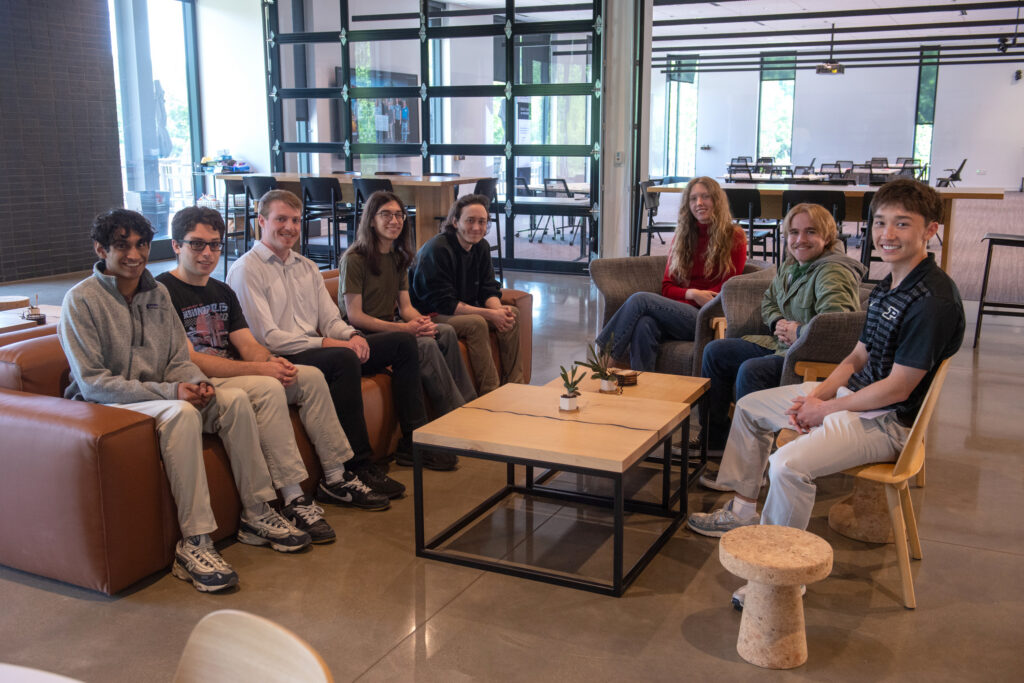
Left to right: Evan Dossett, Luke Tuthill, Aryan Kumar, Nick Wu, Ethan Spiece, Owen Zuranski, Nathan Martin, and Greta Gale
What Surprised Them Most
Aryan was struck by how collaborative the culture is across every level. Staff engineers, seniors, and juniors are all equally willing to lend their time, and impromptu design discussions happen constantly, no formal meeting required.
“Everyone, from staff engineers to seniors to juniors, are willing to lend time to help.”

For Owen, it was the learning culture. Nobody at SEP is afraid to say they don’t know something, because the whole environment is built to reward curiosity over having the right answer already. That kind of openness comes from a high bar for who gets hired, and it shows in how people treat each other day to day. Owen also picked up something he didn’t expect to learn: a real appreciation for client communication. It’s easy as a STEM major to write off the business side of the work, but sitting in on a few meetings about client specifications gave him a new respect for the skill it takes to manage that responsibility.
“The worse the question, the better the question.”

Luke had assumed senior engineers would always be too busy to answer questions from an intern. He found the opposite. He spent hours at a time pairing with senior engineers on his team, working through bugs and problems together, no impatience involved.
“I previously had the assumption that senior engineers were always too busy to answer all of your questions, but I found it to be the complete opposite.”

Their Favorite Memory
Aryan’s favorite moment was getting real input on the design of his team’s backend and APIs, working tickets alongside the team rather than off to the side of it.
Nathan’s favorite moment came from a task that wasn’t glamorous on paper: writing CSS to match a design spec. What made it stick was that it was his first solo task, the first time he worked something start to finish without pairing with a teammate. Being trusted with it felt like a milestone, and the code review that followed, thorough but kind, taught him more about the codebase than the task itself did.
“It felt amazing to be trusted with something like that, and I was very proud of the work that I did.”

Greta found her own version of that same trust on the BizOps side. Rather than working from a rubric, she had to decide for herself what “done” looked like on her projects, a skill she says she’s carrying with her long after the internship ends. She also accidentally learned lessons in corporate jargon.
“Being an intern at SEP doesn’t mean worrying about getting something done; it means worrying about making progress.”

Luke’s came from a bug hunt. He and a senior engineer on his team tracked down and fixed a bug in low-level event handling code that had been sitting in their project’s embedded device for at least two years. When they brought it to an engineer who’d previously worked on the project, he was just as surprised the bug had been there all along.
Owen pointed to the SEP hackathon, an excuse to learn something new, connect with people he wouldn’t otherwise have worked with, and feel supported by a company invested in his growth. The catering didn’t hurt either.
Advice for Next Year’s Interns
Owen’s advice is simple: the worse a question feels, the more you need to ask it. If something seems obvious or the premise feels shaky, that’s exactly the moment to speak up, however embarrassing it seems in the moment. The alternative, staying quiet for months while the same thing confuses you, is a lot more embarrassing later, especially when everyone around you genuinely wants to help.
Nathan’s take runs parallel: don’t be afraid to pick up a task just because you don’t know how to start it. Dig into the codebase, ask your teammates as many questions as it takes, and take advantage of how willing people are to walk you through it. Every intern we talked to said some version of the same thing, and it’s the reason this is a place that wants you to tackle the hard, unfamiliar stuff instead of avoiding it.
✨ AI Post Recap
Five SEP interns from the 2026 summer cohort share what surprised them, their favorite memory, and their advice for next year’s class. The thread running through all five accounts: SEP’s staff, from senior engineers to the people running client meetings, treat an intern’s questions as worth answering rather than a distraction, and that openness is what most of them didn’t expect going in.
What surprised SEP’s 2026 summer interns the most? Nearly every intern was surprised by how willing senior staff were to help. Several expected senior engineers to be too busy for their questions and found the opposite: hours of hands-on pairing on real bugs and real projects.
What advice do SEP interns give to next year’s cohort? Ask the question that feels too obvious to ask. Interns say asking early, even about something that feels basic, beats staying quiet and confused for months while everyone around you is willing to help.
What is SEP’s summer internship program actually like? SEP interns work on real client projects alongside engineers, designers, and mentors, with hands-on trust from day one: solo tasks, direct input on backend and API design, and access to traditions like the company hackathon.
