

About Aaron
Background and Education
Aaron attended Anderson University and studied Computer Science and Mathematics. Before joining SEP, he worked at Availity, RealMed, and Ontario Systems (now Finvi) with a focus on medical claim processing and revenue lifecycle management.
Aaron has spent much of his career working in the healthcare industry, working on areas including: diabetes care (patient + provider solutions), health data management, and medical transaction processing. Outside of the healthcare and pharmaceutical spaces, Aaron has worked in the aerospace, fintech, manufacturing, telecommunication, and cybersecurity industries.
Working at SEP
Aaron brings deep technical and product experience shaped over more than a decade at the company. He joined SEP in 2012 as a Software Engineer and spent years working closely with teams and clients in both engineering and product owner roles.
In 2025, he moved into the Engagement Manager role, where he focuses on guiding client projects, mentoring teams, and supporting our quality system through internal initiatives and ISO accreditation work.
In the Community
Aaron works with several community impact organizations in Madison County, serves on a STEM advisory committee for the Anderson Community Schools, and serves on the TechPoint AI Network Advisory Council.
On a Personal Note
Aaron lives in Anderson, IN with his spouse and three children. Outside of work, he enjoys bike riding, baking, cooking, and board games–especially the longer, strategy-heavy varieties.
Posts by Aaron

The ‘Should We?’ Question: Evaluating AI Before You Commit
There is a common type of discussion happening at lots of companies right now. It may start when a competitor ships an AI feature, when a key stakeholder asks about the AI strategy, or when someone returns from a conference excited about what AI could do. The conclusion of “we need AI in our product” […]
How Autonomous AI Agents Leverage Text Completion Capabilities
This is the fourth post in a series that looks at how autonomous agents use generative AI models. Introduction The previous post showed how programmatic interactions with Open AI’s language models function. In this post, we’ll look at how two different autonomous agents (BabyAGI and Auto-GPT) leverage these capabilities. Agents like these provide a way […]

Chatting With A LLM – Using the Open AI APIs
This is the third post in a series that looks at how autonomous agents use generative AI models. Introduction The previous post discussed how the text completion and chat completion capabilities work generally. It also showed some examples of prompts and responses. In this post, we’ll see how to use Open AI’s API to perform […]

Probabilistic Chatting – How Text Completions and Chat Completions Work Behind the Scenes
This is the second post in a series that looks at how autonomous agents use generative AI models. Introduction The previous post introduced transformers and how they impacted recent natural language processing (NLP) developments. In this post, we’ll take a look at how this sort of transformer model works with completion and chat completion interactions. […]

The Rise of Transformers-An Introduction to AI Transformers and LLMs
This is the first post in a series that looks at how autonomous agents use generative AI models. Introduction The past few years have included rapid advancements in the field of artificial intelligence (AI). These advancements are particularly demonstrable in the natural language processing (NLP) domain. Newer transformer based models have demonstrated remarkable capabilities in […]
Suddenly Remote?
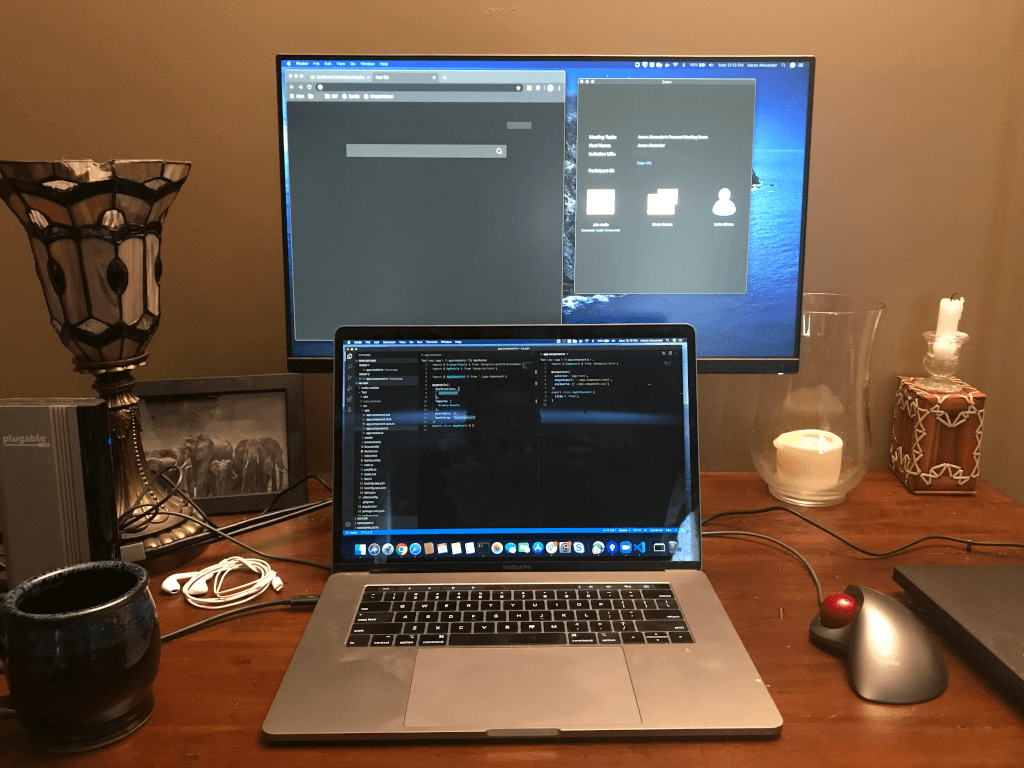
I shared some thoughts with my team last week as we were thinking through what all-remote would look like for us. Now that we are in an all-remote stance (as are an increasing number of companies), those thoughts are more broadly applicable. The tips below are things that have helped me work effectively in the […]