
AI & Data Articles
Getting Physical with AI (2): A System 1 Brain for My Musubi-Making Agent
I made a YouTube video covering most of what’s in this post, complete with clips of the robot in action. If you’d rather watch than read, check out the video here: My musubi agent already has a body, the SO-101 robotic arm I built in my last post. Now the challenge is to build the brain that […]

Getting Physical with AI (1): A Body for My Musubi-Making Agent
AI agents are pretty fantastic. I use tools like GitHub Copilot and Claude Code daily to code and learn, and they’re a massive help. My biggest complaint is their usefulness today is trapped in the digital realm. And digital agents can’t place a slice of grilled Spam onto a bed of rice or fold nori, […]
What Fast-Changing AI Tools Mean for Choosing a Design Partner
Ask a designer what’s essential to their process right now and you’ll get a very different answer than you would have a year ago. Coffee, a decent mouse, a pack of Sharpies, sure. But increasingly, a stack of AI tools that didn’t exist twelve months ago, layered inside the tools that did. That pace of […]

Your AI Agent Doesn’t Have a Capability Problem. It Has a Communication One.
I keep hearing some version of the same complaint. It still produces slop. My job is clearly safe for a while longer. It couldn’t handle the simplest request. Some days it just seems… off. The easy conclusion is that the model isn’t good enough yet. A better one is coming, and it’ll finally get out […]

Building an AI Dungeon Master With Real Memory
This post walks through three techniques I used to give an AI Dungeon Master real memory: tiered storage across a NoSQL event log, a vector database, and a knowledge graph; narrative hierarchies that break story goals into smaller pieces; and proactive retrieval that pulls in the right context before the AI needs it, instead of […]

Local LLMs for Software Development: Where We Are Today
Local LLMs can do software development work today if you get the hardware, model, and harness right. Here's the full stack I'm running, with real speed numbers.

Faster Coding Means Slower Everything Else
At some point in the last year, my work changed: I was spending more time reviewing code than writing it. I can’t point to the moment it happened, there was no process change, no deliberate decision… I just looked back at the last year and noticed what had happened. Once I noticed it, I started […]

Custom AI vs. Off-the-Shelf: Stop Asking If, Start Asking Where
A client came to us with a clear vision: build a scheduling app for their staffing business, complete with a natural language interface so managers could describe scheduling constraints in plain English instead of wrestling with a GUI. They knew exactly what they needed custom AI for. They were wrong. Custom AI is software built […]
We Turned an Awards Ceremony into a Live Arcade With AI
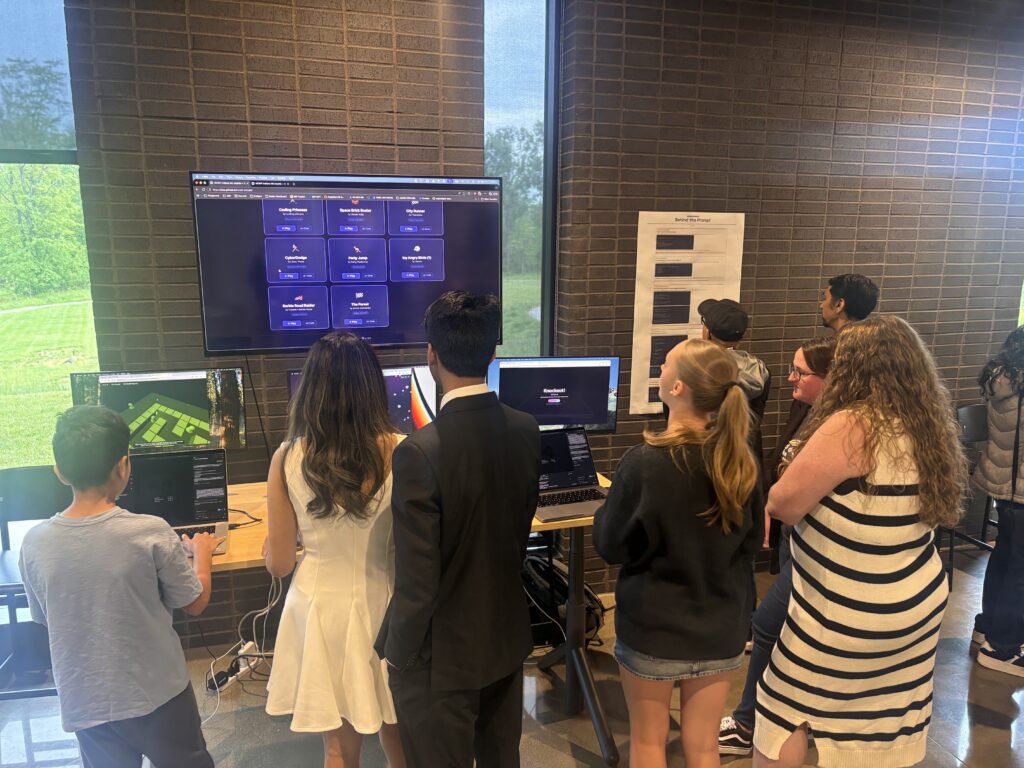
How SEP used Generative AI to help NCWIT Awards participants build and deploy Three.js games

We’re Picking Tools for a Different Developer Now
A colleague of mine, Joe Coy, recently told me something that stuck with me. His team had chosen Maestro over Appium for mobile UI testing. The team’s reasoning made a lot of sense: Maestro was lightweight and easier to set up. By every traditional measure, it was the right call. Then they started using an […]

Agentic Bug Fixing Experience Report
We recently released our first beta build to our client’s QA. Their Software Development Product Manager knows her failure cases inside out and quickly compiled eight tricky bugs. We wondered how the Agent would handle them. Gotta start somewhere We took her bugs as a list of platforms and what she found. We wrote (I […]

Agentic Software Development Requires Good Engineering Practices
I’ve recently started working on a client project that is using Agentic AI to develop a sizable mobile application with a medium sized team. There are a couple of lessons I’m learning about how AI and architecture fit together. We have found the number of lines of code each developer generates is far more than […]